 JOPARE MEDIA
 A JOPARE Media channel
The Intelligence Report
Programmable money, 15-minute cities and geofencing: questions of freedom
The episode explores programmable money, digital ID, 15-minute cities and geofencing, asking how connected systems could affect spending, movement and personal independence.
Digital systems enter a personal decision
The episode connects concern about digital identification and central bank digital currencies with a question about where to build a life. For some African Americans and Britons considering Ghana, privacy and independence are part of the appeal of a different way of living.
A digital ID is a way to prove identity electronically. A central bank digital currency, or CBDC, is digital money issued by a central bank. The report asks how dependence on such systems could affect ordinary choices, financial independence and freedom of movement.
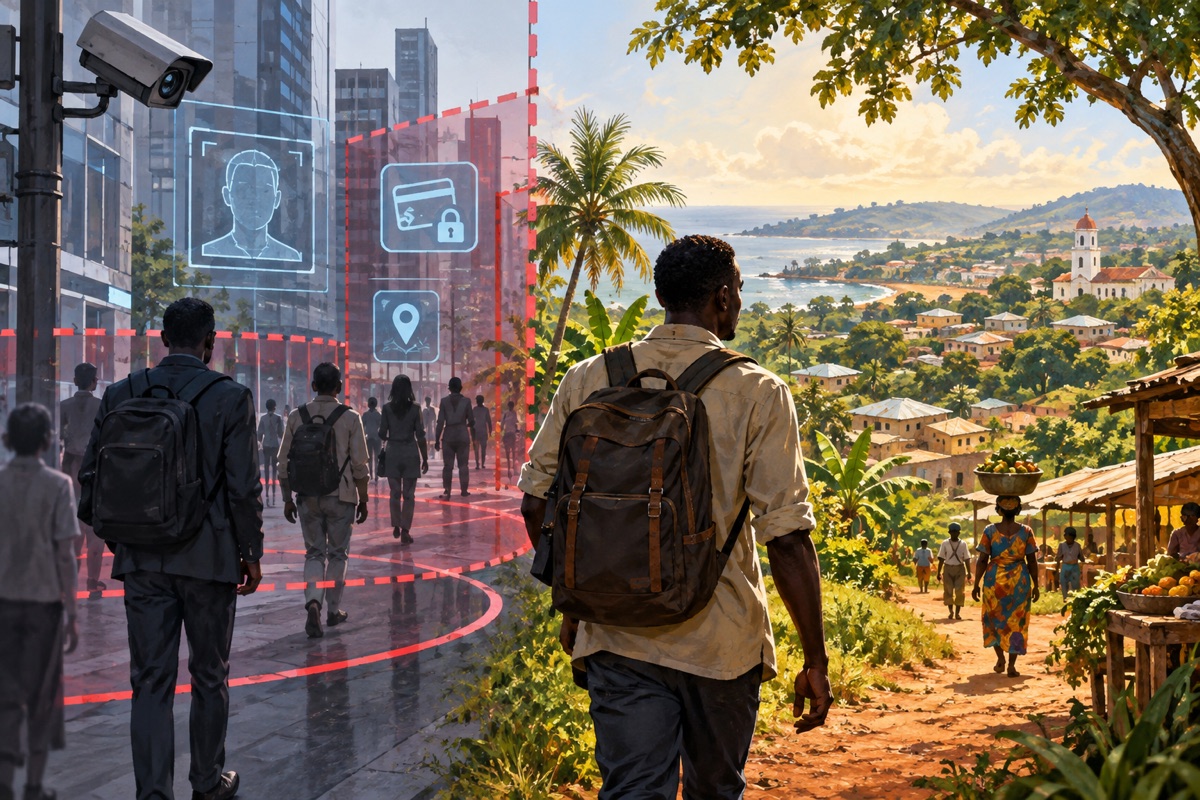
Convenience and control
The concern is about how systems are designed and who controls access. What information is collected? Who can use it? What happens when someone cannot access an account or disagrees with a decision?
Those questions make the technology personal. Access to money and the ability to move are part of everyday security. The episode explores why uncertainty about future systems can lead people to reconsider the kind of life they want.
Programmable money: who sets the rules?
The episode explores the concept of programmable money: money or payment systems with rules built into how transactions work. Opare asks what it could mean for personal freedom if those rules controlled when, where or on what a person could spend.
The concern is about authority as much as technology. Who would set the conditions, how could they change, and what choices would remain for someone who disagreed? The episode considers these possibilities as part of the wider debate about financial independence.
15-minute cities and geofencing
The discussion also brings in 15-minute cities and geofencing. A 15-minute city is a planning concept that aims to put everyday services within a short walk or cycle of home. Geofencing is a separate technology that uses a virtual boundary to trigger a digital action based on location.
Opare explores the concern that location-based controls, digital identity and payment rules could be connected in ways that restrict individual choice. A neighbourhood with nearby services does not itself impose a digital boundary; the episode’s question is what could happen if systems governing movement and spending were linked.
That makes the ability to travel and use your own money part of the same conversation. The report asks where useful convenience could give way to dependence on rules that an individual cannot control.
Why Ghana enters the conversation
The description presents Ghana as an option for people seeking simpler, more community-driven living. Rural self-sufficiency, land ownership and spiritual reconnection are important parts of that vision.
The attraction is not only a change of address. It is the possibility of organising life around different priorities: closer community ties, a stronger connection to land and greater involvement in providing for everyday needs.
A more intentional way of living
The report links these ideas to relocation decisions among members of the diaspora. It asks what independence means in practice and why some people feel drawn towards building that independence in Africa.
Different countries also have their own digital and financial systems. The choice described in the episode is therefore about the way people want to live, rather than a guarantee that changing countries removes every digital requirement.
The accompanying video brings together technology, personal freedom and the possibilities of community life in Ghana. Its central question is how people can make deliberate choices about their future as the systems around them change.