 JOPARE MEDIA
 A JOPARE Media channel
The Intelligence Report
Operation Dudula and the pressure on African migration
Anti-migration campaigning in South Africa has become a regional issue, connecting domestic political demands with the safety and livelihoods of people from other African countries.
Immigration becomes a debate about African unity
Operation Dudula is at the centre of a dispute over immigration, jobs and national identity in South Africa. Supporters call for stricter action against illegal immigration; critics fear the movement could damage relations between African communities and countries.
The episode asks how that confrontation could affect the future of movement across Africa. Its significance extends beyond a single demonstration to the conditions under which people work, trade and build lives across borders.
Jobs need evidence, not assumptions
Supporters connect stricter immigration action with protection for local jobs and businesses. But showing that a community faces unemployment does not identify its cause or demonstrate that a particular campaign will improve it.
A useful assessment would examine employers, working conditions and the actual opportunities available. Treating foreign residents as one category skips differences in status, work and family circumstances. It also risks distracting attention from decisions made by people with power over the labour market.
The regional cost
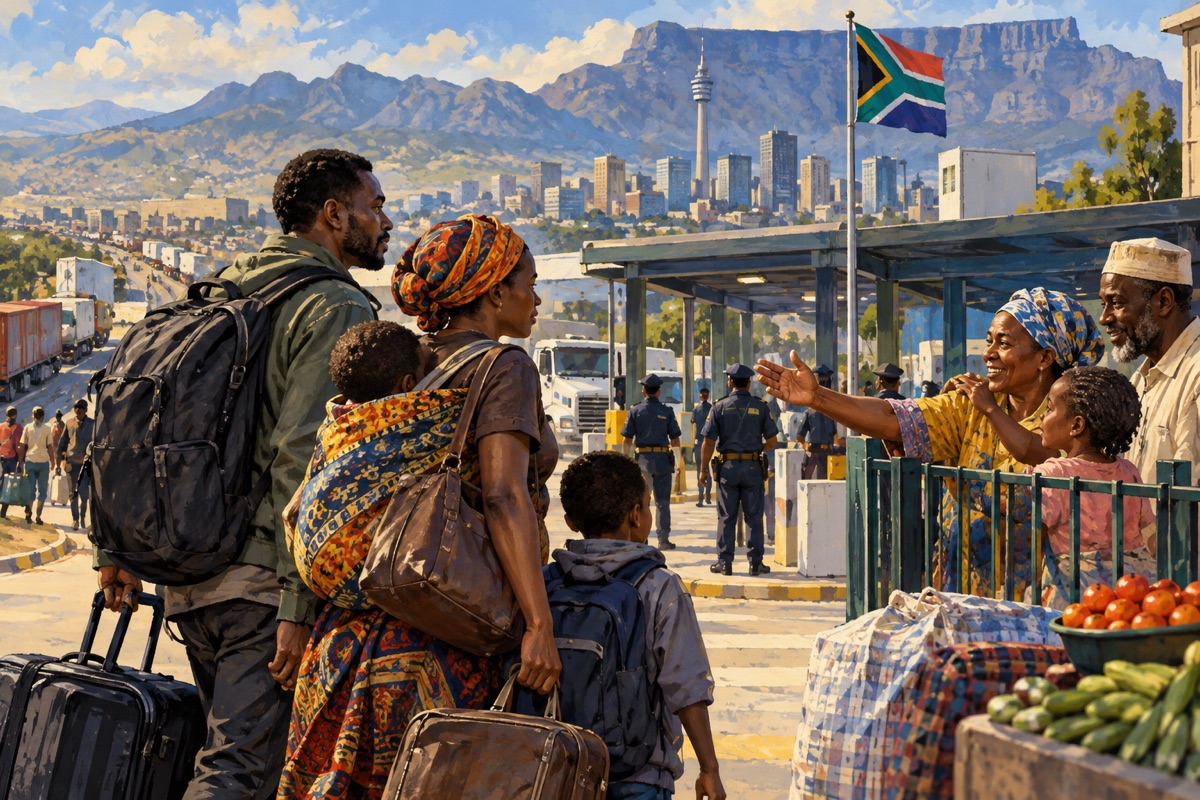
For African families spread across borders, migration is already part of ordinary life. People work in one country while supporting relatives in another. Businesses can also depend on customers, workers and suppliers from several places.
Our analysis is that intimidation threatens those connections even when it does not become a formal policy. If people avoid work, close a business or leave unexpectedly, the cost reaches beyond the person directly targeted.
Enforcement and cooperation are both political choices
The question is not whether governments have immigration rules. It is how those rules are administered and how people are treated while they are enforced. Regional cooperation loses meaning if public hostility makes lawful movement unpredictable.
The accompanying report explores that tension. Our consular-protection analysis looks at what home governments owe citizens caught in the dispute.