 JOPARE MEDIA
 A JOPARE Media channel
The Intelligence Report
Healthcare in Ghana: what an emergency reveals about moving home
Dr Joseph Opare’s account of taking his wife to hospital raises a practical relocation question: how will your household reach the care it needs?
Start with the experience described
In the accompanying episode, Opare recounts a medical emergency involving his wife in Ghana. The story focuses on access, hospital facilities and the lessons he drew from seeking treatment.
A personal experience can make an overlooked issue immediate. It also directs attention to a specific journey through care: recognising a problem, travelling to a facility and reaching a service able to respond. Those stages matter more than a broad claim that one country’s system is simply good or bad.
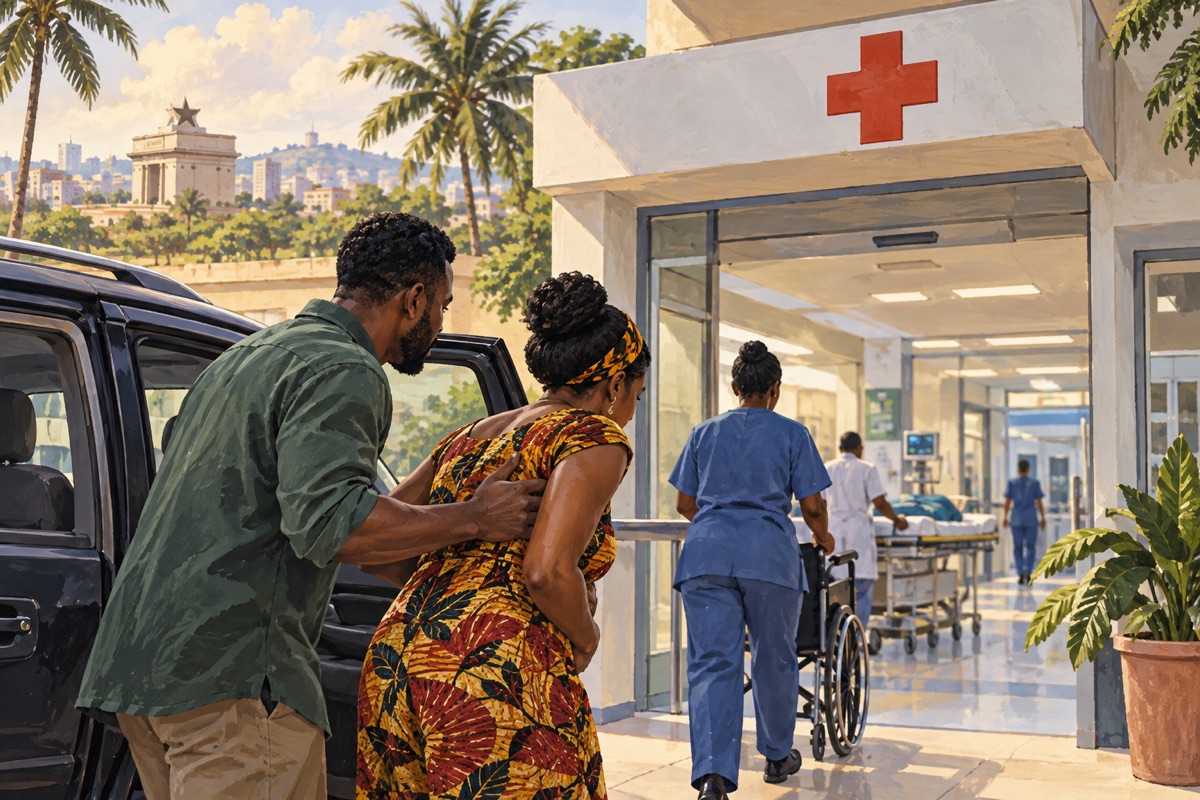
A nearby building is not the whole answer
The World Health Organization describes emergency care as involving services before arrival as well as treatment inside a facility. Access is therefore a chain, rather than just a hospital address.
For someone choosing where to live, useful questions include the services a nearby facility provides, its operating arrangements and how referrals work. These are questions to ask the facility directly, because a name or attractive building does not explain every capability.
Patient identification and payment
Opare also discusses obtaining a Ghana Patient ID card and the payment expectations he encountered. These practical details are part of his account of navigating care, alongside the facilities available in an emergency.
The episode compares that experience with expectations shaped by healthcare in Britain and the United States. The purpose is to help prospective movers think through registration, costs and access before they need a service urgently.
Make healthcare part of the relocation plan
A move is often planned around accommodation, schools and employment. Healthcare belongs in that same conversation. Households can have different needs, especially when regular appointments or an established treatment plan are involved.
Before relocating, discuss continuity of care with the relevant clinicians and confirm insurance arrangements with the provider. Knowing how payments and records will be handled can reduce uncertainty when a service is needed. This is planning for access, rather than choosing a treatment through a video.
Judge the local options
The most useful comparison is between the services available where a family actually lives. A national reputation cannot tell a household its travel time or explain the arrangements at a particular hospital.
The episode gives that planning question a personal starting point. For diaspora readers considering Ghana, it is an invitation to include care in the practical meaning of home: not only where life feels appealing, but how everyday needs and unexpected events will be managed.