 JOPARE MEDIA
 A JOPARE Media channel
The Intelligence Report
Could rural Ghana offer the diaspora a refuge if world war escalates?
Dr. Joseph Opare considers rural Ghana’s prospects during a wider war, comparing local food production with the risks of fuel shortages, disrupted city supplies and harsh winters.
Why rural Ghana enters the conversation
If a global conflict escalated into a wider world war, where would diaspora families be best placed to meet their everyday needs? In this episode, Dr. Joseph Opare considers the prospects offered by Ghana, particularly its rural communities.
His argument centres on practical needs: food, fuel, shelter and the ability to keep going when normal supplies are disrupted. He compares the pressures that could face people in Western cities with the possibilities of living closer to food production in rural Ghana.
What happens when city supplies are interrupted?
Opare asks viewers to think about the logistics behind city life. Food reaching a shop is the final stage of a journey involving producers, storage and transport. In the scenario explored in the episode, a major conflict puts those connections under pressure.
Fuel shortages are central to that concern. What happens if deliveries become harder to make, transport costs rise or people struggle to travel for essential supplies? The discussion asks how households would cope when systems they normally rely on stop working as expected.
The question is not simply whether a city is far from the fighting. It is whether the people living there can still obtain what they need when disruption reaches the routes and services that support them.
Winter could make the pressure worse
The episode also examines how winter could deepen a crisis in colder countries. A household facing fuel shortages may need to think about heating as well as transport. Keeping warm becomes another urgent demand alongside finding food.
Opare highlights the difficulty of turning to food growing during cold spells. Planting an emergency garden is not an immediate answer when the ground and weather are unsuitable. Even where growing is possible, a harvest takes time.
That combination—disrupted deliveries, scarce fuel and difficult growing conditions—is an important part of his comparison. How much room would a family have to adapt if several pressures arrived together?
The case for living closer to the land
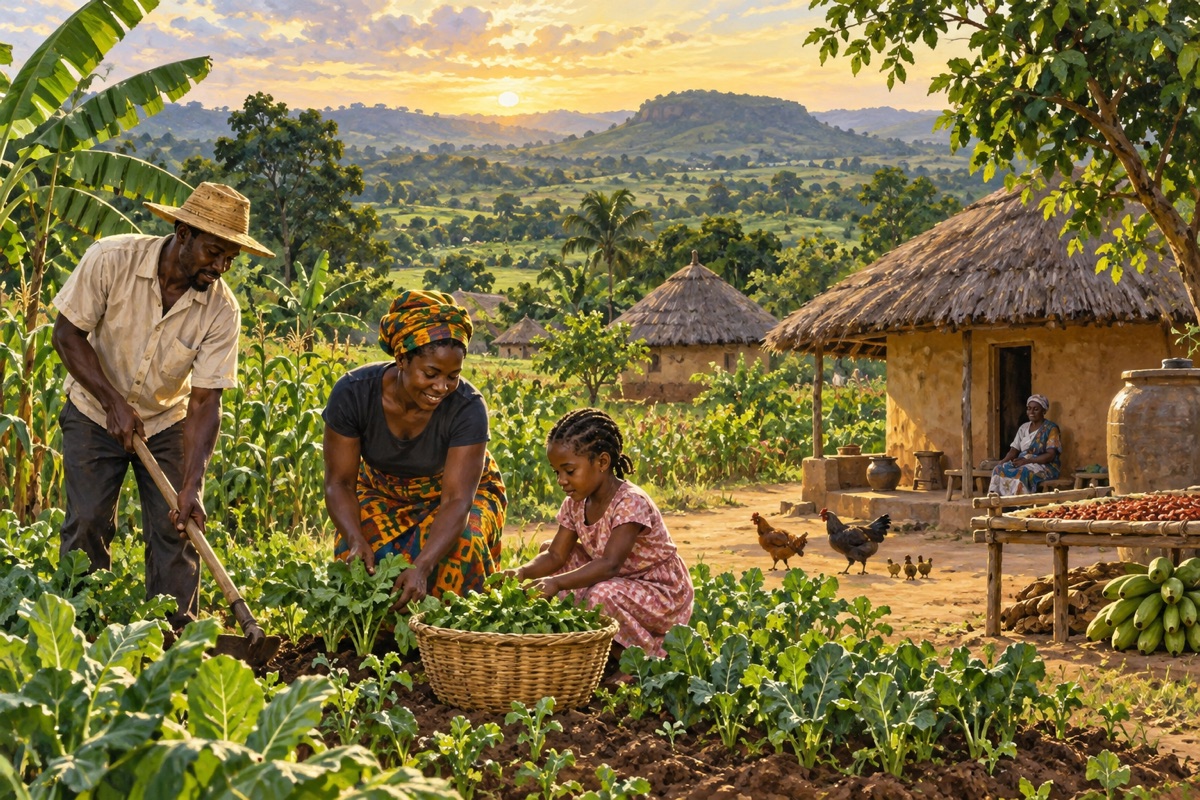
Against that scenario, Opare explores whether rural Ghana could offer better prospects. His focus is the potential to live closer to growers, develop practical food-growing skills and build relationships within a local community.
The appeal is a way of life with more direct access to some everyday essentials. For diaspora families, the discussion raises a concrete question: could a home in rural Ghana give them more options during a prolonged disruption?
Making that possibility work requires preparation. Access to land is only a starting point; knowing how to use it, understanding local growing seasons and having reliable access to water are part of turning the idea into a practical plan.
Think through the plan before a crisis
The episode invites viewers to consider these choices before events force a rushed decision. What would your household need to live in a rural community? Which skills, relationships and arrangements would you want in place first?
Watch Opare’s discussion of rural Ghana, Western supply networks and the added pressure of winter. The central question is whether preparing a life closer to local food production could give diaspora families better options if global conflict escalates.