 JOPARE MEDIA
 A JOPARE Media channel
The Intelligence Report
How Middle East conflict puts pressure on food prices
Energy and fertilizer are routes through which conflict can reach food budgets far from the fighting. The effects are particularly important where households already spend heavily on essentials.
A conflict can reach the shopping basket
The episode asks how conflict involving Iran and Israel could put further pressure on food prices. Its concern is the chain linking energy, shipping, farming and household costs in the months ahead.
Food has to be grown, processed, stored and transported. Higher costs at several stages can put pressure on what consumers eventually pay, even when they live far from the fighting.
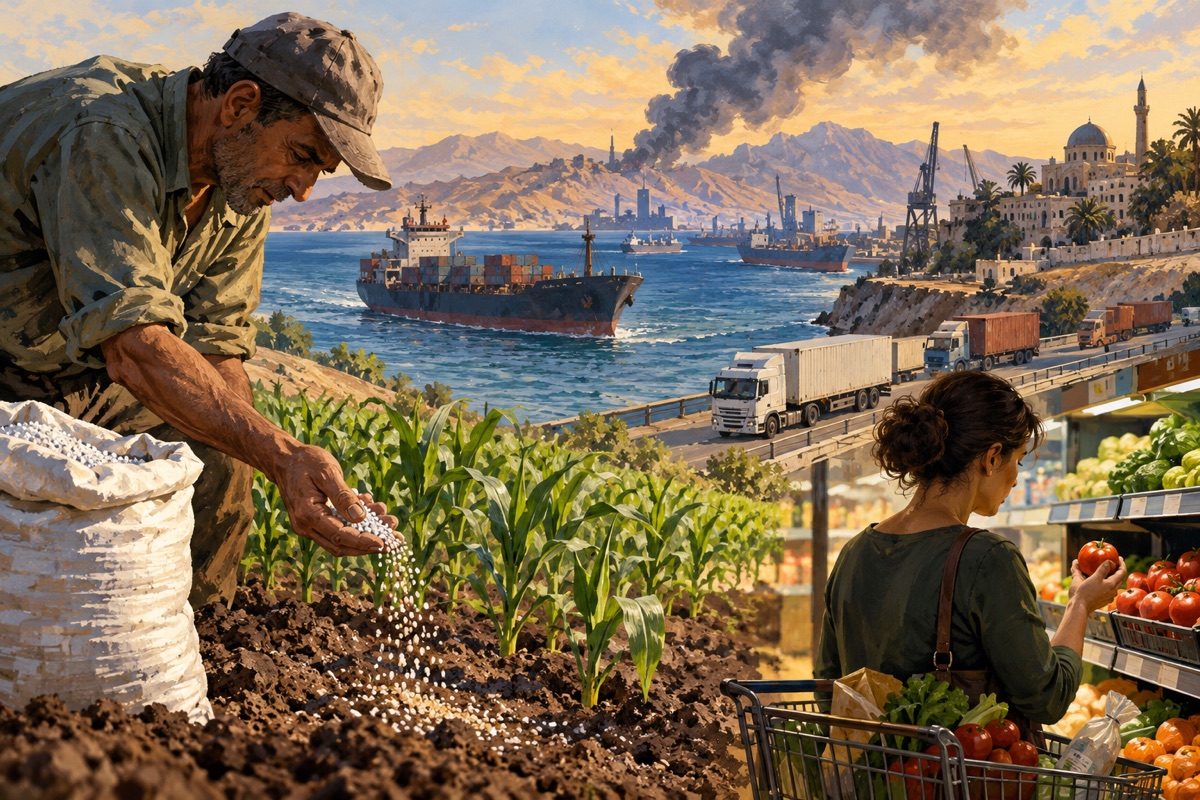
Why fertilizer matters
Fertilizer supplies nutrients to crops. Its price matters before food reaches a market, because farmers must decide what they can afford to use during production. Supply disruption can therefore affect a growing season as well as a current shopping bill.
The report examines disruption to transport and supplies as risks facing producers. Its focus is how those pressures could affect consumers during the second half of 2026, rather than a claim that every possible increase has already happened.
Why households feel different effects
The size of the impact depends on where food comes from, transport costs and how businesses respond. A global rise does not produce an identical increase in every shop. The useful question is which part of the local supply chain is under pressure.
For people supporting relatives abroad, there can be pressure on both ends of a family budget. Living costs where they work may rise while the same transfer buys less food for relatives. This is one reason international economic news has a direct household meaning.
The African supply question
Our analysis is that resilience requires attention to agricultural inputs and distribution as well as the finished food product. The accompanying video explores the conflict connection. Our fertilizer report examines whether African production translates into dependable access for farmers.